

In addition to our 8-core nutrition education lessons for high school health classes, we have created four additional lessons. These lesson topics were requested by health educators we have worked with on curriculum development. Each lesson comes with a lesson overview, lesson slides, and several activities. All lessons can also be used to address National Health Education Standards.
You can preview the additional lessons below and submit this form to get immediate access to all lesson content.
Eating Disorders
In this lesson students learn about eating disorders and explore how media, language, and cultural norms influence body image and eating behaviors. Students identify common types of eating disorders, dispel myths, and develop strategies for supporting peers in a stigma-free and compassionate way.
Learning Objectives:
- Recognize DSM-V eating disorders and disordered eating behaviors (SWAG stereotype)
- Understand how language and social media shape perceptions of body image and eating
- Practice supportive, stigma-free ways to respond to peers and demonstrate where to turn for help
Micronutrients
In this lesson, students develop a greater understanding of what constitutes a vitamin & mineral and what their general functions are in the body. They will then explore the various fat- and water-soluble vitamins, as well as a few important minerals, and their roles in maintaining bodily homeostasis. The lesson will conclude by showing students how to apply what they’ve learned to the skills of understanding micronutrient consumption and analyzing nutrition labels.
Learning Objectives:
- Identify key micronutrients that are needed for general health & well-being.
- Identify food sources of key micronutrients.
- Observe nutrients on food labels.
- Differentiate between vitamins and minerals.
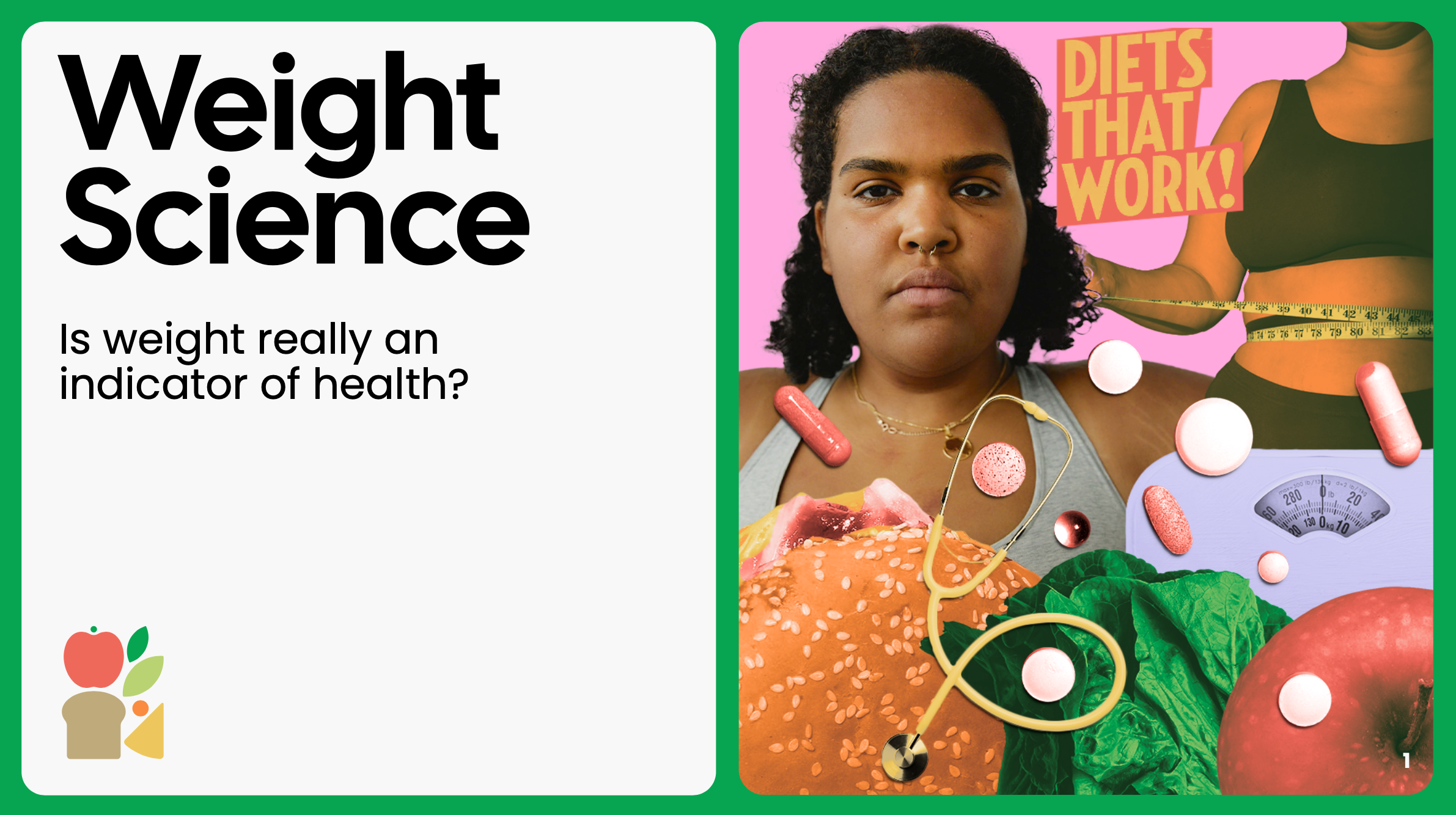
Weight Science
In this lesson students learn about the history behind our country’s emphasis on weight in healthcare settings and why health has been so closely associated with weight. They will then learn about how our common assumptions about weight being an indicator of health are not based in scientific fact and about many of the factors that may influence someone’s weight that are outside of a person’s control. The lesson will end with the takeaway that there are many different domains of health and that if people are truly concerned about individual and public health then they should be thinking more broadly about what it means to be “healthy”.
Learning Objectives
- Identify why using BMI is problematic
- Explain how many factors influence body weight, not just individual choices
- Acknowledge that the relationship between weight and health is complicated
Weight-Based Bullying
In this lesson students learn about weight-based bullying and explore how it affects individuals and school environments. Students identify examples of weight-based bullying and develop strategies for responding supportively as a friend, peer, or bystander as well as strategies for creating a more positive and inclusive school culture.
Learning Objectives:
- Define weight-based bullying (WBB) and recognize its signs and behaviors
- Explain how WBB affects an individual’s physical and mental health
- Identify strategies for responding to weight-based bullying as a friend or bystander