Comics-Based Research (CBR) emerged about a decade ago as a field of practice that applies systematic arts-making, data visualization, and sequential narrative practices to research in the humanities, social sciences, and natural, physical, and medical sciences. It aligns with a broader efflorescence of sequential arts and narrative in popular and academic cultures as graphic novels, manga, comics journalism, non-fiction comics, graphic medicine, data comics, and others.
Comics can be employed in all aspects of research, including:
- Data generation and collection, i.e., sketching and drawing observations in the field, lab, or archive; asking research participants to create drawings and sequential art narratives; creating lab or fieldwork comics to share with research participants and spark dialogue, etc.
- Data analysis, i.e., drawing to make sense of observations, including—but not limited to—visual memos; techniques of data visualization; drafting mini-comics that explore a particular archival or fieldwork story, anecdote, theoretical reflection, etc.
- Research dissemination, i.e., using comics to communicate research findings with the world, either as part of a piece of conventional scholarship, or as a standalone piece of comic art, in a range of forms: DIY zines, webtoons/digital comics websites, peer-reviewed journal articles and books, etc.
CBR offers creative research modalities to address new problems, foster new modes of cross-disciplinary thinking, and present complex issues and systems with clarity and style that can broaden public outreach and enhance the visibility of research.
In this symposium and retreat, we aim to take stock of where CBR practices are right now: How far has this movement gone since its emergence a decade or so ago? What new forms has it taken? What challenges does the practice of CBR face?
Learn more:
- UVM’s Comics-Based Research and Comics Studies Research Guide
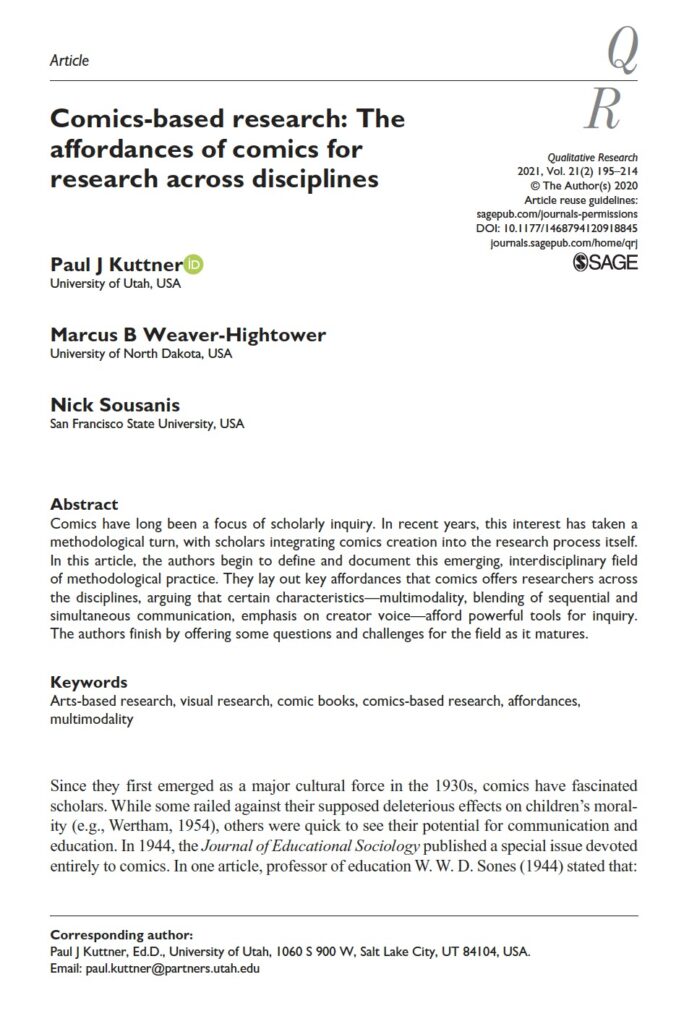
- Click on the article below, co-authored by our Keynote speaker, Marcus Weaver-Hightower.